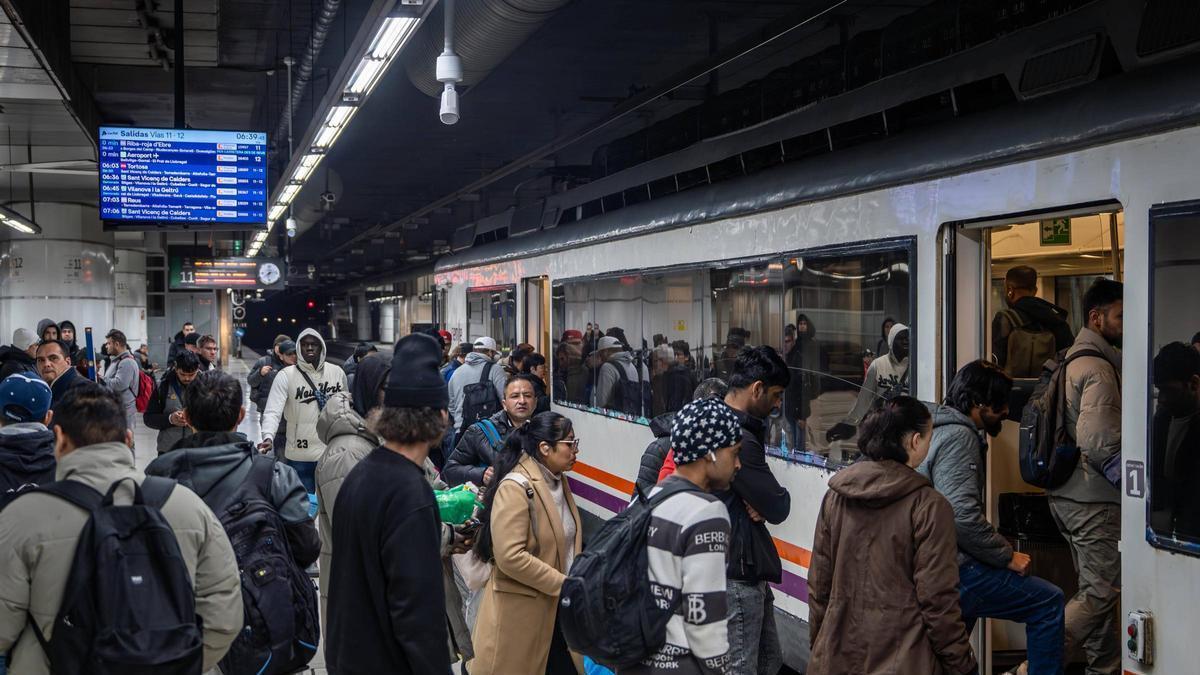


“I Don’t Understand. Why Does Everything Happen All at Once?!”: The Perfect Storm Behind Catalonia’s Railway Crisis
A Comment That Captured Collective Frustration
The Instagram comment “I don’t understand. Why does everything happen all at once?! Were we that bad?” beneath a news report perfectly encapsulated the bewilderment of thousands of Catalonia’s rail passengers. This outcry followed a catastrophic series of events between January 20-27, 2026, that exposed systemic vulnerabilities in Rodalies’ rail network – a crisis experts warn was years in the making.
The Trigger: Climate Meets Crumbling Infrastructure
On January 20, 2026, torrential rains – three times higher than seasonal averages – caused an AP-7 highway retaining wall near Gelida, Barcelona, to collapse onto an R4 line train. The tragedy claimed the life of a trainee driver and injured 30 passengers, occurring just 48 hours after a deadly derailment in Adamuz that killed 45. Adif President Luis Pedro Marco described the weather as “exceptional… rainfall unseen since the 1950s“, but engineers counter that climate adaptation failures exacerbated the damage.
“Civil engineers have warned for years that return periods are changing. Structures designed for historical weather patterns require intensified monitoring,” explains Dr. Sergio Sánchez Gómez, mechanical engineering researcher at Rovira i Virgili University, highlighting how track vibrations reported by drivers indicated long-term fatigue damage.
The Structural Problem: A Decade of Disinvestment
Post-crisis inspections revealed alarming infrastructure decay:
- 30+ critical defects requiring immediate repair
- 155 speed-restricted sections
- Key closures including Martorell’s 20km stretch and Rubí tunnel (R8)
Researchers trace this to 15 years of budgetary neglect. “Rail investment fell 32% between 2009-2022 after inflation adjustments,” notes infrastructure analyst Miquel Virgili Martínez, ETSAB predoctoral researcher. “Reactive patchwork fixes replaced preventive maintenance, creating fragility across the network.”

Communication Breakdown: The Trust Erosion
As services faltered, institutional responses worsened passenger frustrations. Crisis communication expert Ferran Lalueza (UOC) observed:
“Officials prioritized reputational protection over operational transparency. Four separate ‘return to normal’ announcements collapsed within hours due to new technical failures or safety refusals by drivers.”

Path Forward: The 2026-2030 Rodalies Plan
New measures aim to address systemic failures:
- €8.037 billion investment (26% increase over prior plan)
- €1.34 billion dedicated to maintenance
- Operational leadership changes at Adif and Rodalies
Dr. Sánchez Gómez emphasizes: “Proactive maintenance costs 5-7 times less than crisis response. This plan must prioritize sensor networks to monitor aging infrastructure under climate stressors.“

Conclusion: A Preventable Crisis?
While climate extremes triggered the immediate collapse, experts unanimously agree years of deferred maintenance and communication failures turned a technical accident into systemic breakdown. As Catalonia rebuilds, success hinges on sustaining investments, improving interagency coordination, and restoring passenger trust through transparent communication.
For affected travelers, one reality remains clear: the Instagram user’s plaintive “Were we that bad?” reflects not passenger failure, but institutional neglect now demanding resolution.
Source: Here
Images Credit: www.diariodeibiza.es