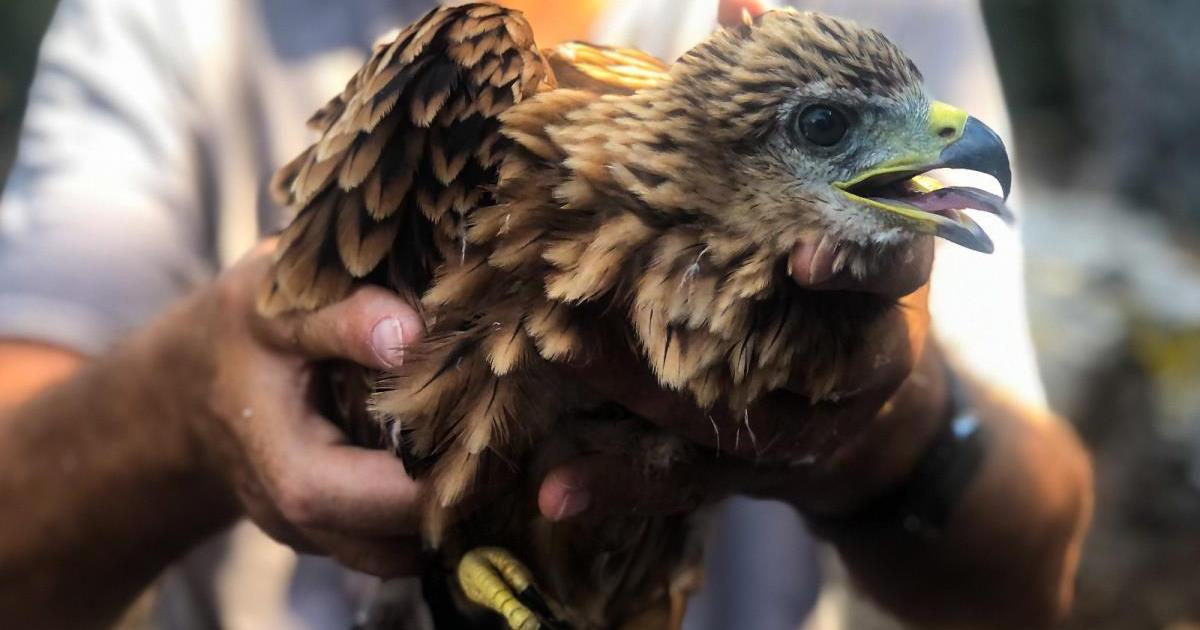


Menorca: A Beacon of Hope for Red Kite Conservation in Europe
Menorca has emerged as a global reference for red kite conservation, demonstrating how sustained scientific effort can rescue a species from near extinction. This Mediterranean island recently showcased its three-decade success story at the IV International Red Kite Congress in Binaced, Spain, where conservationists hailed Menorca’s approach as a model for species recovery.
From Abundance to Near Extinction
During the 1980s, Menorca’s skies hosted approximately 135 breeding pairs of red kites (Milvus milvus). However, the 1990s brought a catastrophic population collapse that reduced the population to just five breeding pairs by 1998 – among the lowest recorded numbers in Europe for this raptor species.
“The twin threats of poisoned baits and electrocution on power lines nearly wiped out our population,” explains Fèlix de Pablo, biodiversity technician at the Consell de Menorca. “At its lowest point, we faced the real possibility of permanent extinction in our ecosystems.”
The Turning Point: Science-Led Recovery
Conservationists initiated emergency measures in the late 1990s through the Menorca Biosphere Reserve Biodiversity Monitoring Program. Their multifaceted approach included:
1. Systematic monitoring of remaining pairs
2. Power line insulation projects
3. Anti-poisoning campaigns with local farmers
4. Habitat protection measures
The results speak volumes: from 18 breeding pairs in 2013, the population rebounded to 72 territorial pairs by 2021 – representing a 1,340% recovery from the 1998 low. Recent surveys indicate stabilization around 70 breeding pairs, a sustainable population for the island’s ecosystem.
Current Challenges and International Recognition
Despite this conservation triumph, challenges persist. Electrocution remains the primary mortality factor, accounting for 60% of recorded deaths according to the Consell’s 2022 impact report. Modernization of energy infrastructure continues to be a priority for conservation teams.
At the recent international congress, Menorca’s conservation team presented both a keynote address and scientific poster detailing their methodologies. The collaboration between the Consell de Menorca, Government Environmental Department, and GOB Mallorca demonstrated how inter-agency cooperation amplifies conservation impact.
Global Knowledge Exchange
De Pablo’s participation in the international roundtable highlighted Menorca’s growing role in global raptor conservation. “Comparing notes with colleagues from Germany, France, and mainland Spain revealed both shared challenges and unique local solutions,” noted the technician. Their documentation of natural predation patterns has become particularly valuable for modeling population dynamics.
The island’s uninterrupted 32-year dataset now serves as a critical reference point for conservation biologists worldwide. As climate change alters ecosystems, Menorca’s long-term monitoring provides invaluable insights into how raptors adapt to environmental shifts.
Source: Learn more about Menorca’s conservation journey
Images Credit: www.menorca.info