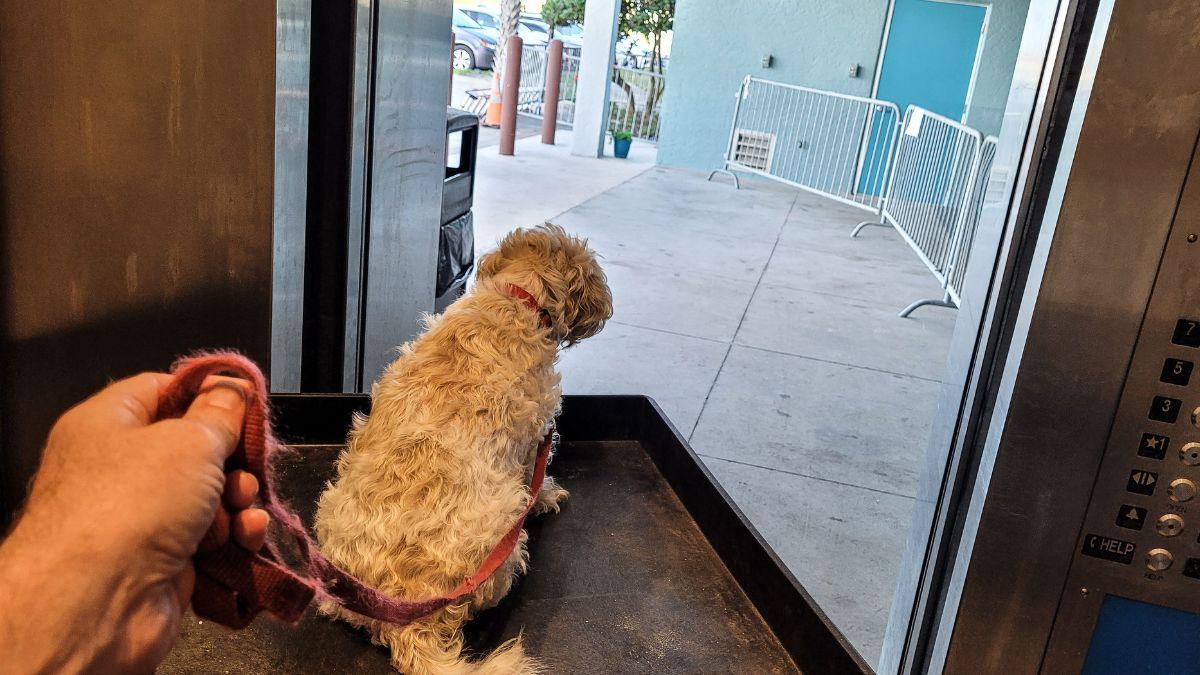


Jupiter the Dog Wins the Right to Ride the Elevator
How a 12‑year‑old dog changed the rules in a Colombian building
Jupiter is a senior dog who lives with his owner Teresa in the Los Robles Residential Complex in Cajicá, Colombia. He suffers from hip dysplasia and a degenerative spinal disease, which makes climbing stairs painful and difficult. Teresa also has osteoporosis and a lumbar hernia, so using the stairs is a real challenge for both of them.
The building’s administration had a rule that pets could not use the elevator without a special permit. This forced Jupiter and Teresa to take the stairs every time they needed to leave or enter their home. After a long dispute, the case reached Colombia’s Constitutional Court.
What the court decided
In ruling T‑199 of 2026, the Constitutional Court said:
- Residential complexes cannot ban or generally restrict pets from using elevators or walking through common areas.
- Such blanket prohibitions violate fundamental rights like the free development of personality and family privacy.
- The building must update its internal rules so that animals can move freely, as long as basic coexistence rules are respected.
The court did not eliminate all rules—it simply said that the rules cannot become a hidden ban on pets.
What a community can and cannot ask of pet owners
Reasonable rules are still allowed
Buildings can set fair guidelines to keep everyone safe and comfortable, for example:
- Dogs must be on a leash in hallways and elevators.
- Owners must clean up after their pets.
- Excessive barking that disturbs neighbors should be avoided.
- Any damage caused by a pet must be repaired by the owner.
- If a dog is considered potentially dangerous, owners must follow legal requirements like muzzling.
What is not allowed
A building cannot:
- Require a special permit every time a pet wants to use the elevator.
- Ban pets from common areas just because they are animals.
- Impose rules that create a disproportionate burden on owners or pets, especially when there are health, age, or mobility issues.
How Spain handles similar situations
Spain does not have a constitutional ruling exactly like Jupiter’s case, but its laws point in the same direction:
- The Horizontal Property Law (article 9) says owners must respect common elements and avoid damage, but it does not contain a general ban on animals in elevators or hallways.
- Law 7/2023 on the protection of animals’ rights and welfare emphasizes responsible ownership, recognizing that pets are sentient beings whose well‑being must be considered.
- Therefore, a Spanish community can ask for leashes, clean‑up, and noise control, but it cannot arbitrarily prevent a dog from using essential common areas like elevators or stairways, especially when the owner or animal has mobility problems.
Why this matters for teens and families
Jupiter’s story shows that laws are starting to see pets as true family members, not just “extra stuff” in the house. When a building respects the needs of both people and animals, everyone can live together more peacefully. For teens who grew up with a dog, cat, or other pet, it’s reassuring to know that the law supports the right to have those companions nearby—while still expecting owners to be considerate of their neighbors.
Conclusion
The Jupiter case set a clear precedent: communities can regulate coexistence, but they cannot impose blanket bans that stop pets from using elevators or walking through shared spaces. Reasonable rules—like leashes, clean‑up, and noise limits—are still valid and necessary. At the same time, owners must look out for their pets’ comfort and respect the rights of their neighbors. As more countries recognize animal welfare in housing rules, we can expect more balanced solutions that keep both people and their furry friends happy.
Source: Experto Animal
Images Credit: expertoanimal.elperiodico.com