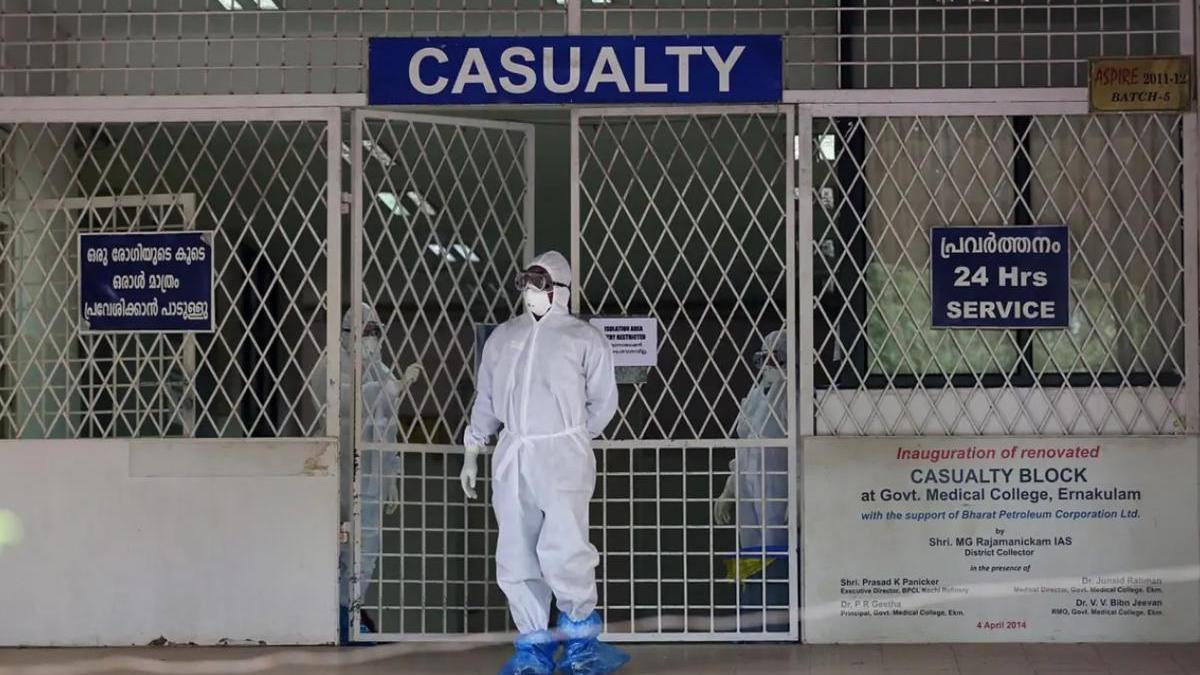


Understanding the Nipah Virus Outbreak in India
The Nipah virus, first detected in Malaysia in 1999, has recently resurfaced in the news due to an outbreak in West Bengal, India. Over the past three decades, approximately 750 cases have been recorded in humans, primarily in Bangladesh and eastern India. The virus is known to spread through direct contact with infected pigs or their secretions, as well as through respiratory droplets or contact with nasopharyngeal secretions or tissues from infected animals.
According to Dr. María Velasco, a microbiologist at the Alcorcón Foundation University Hospital in Madrid and spokesperson for the Spanish Society of Infectious Diseases and Clinical Microbiology (SEIMC), the Nipah virus is particularly dangerous due to its high fatality rate and the limited understanding of certain aspects of the virus. “We know that it causes encephalitis, which is a serious infection,” she explains.
The WHO considers the risk of expansion of the lethal Nipah virus “low” after the alert in India / EFE
Current Outbreak in India
The recent outbreak in West Bengal, India, has resulted in two confirmed cases, both of whom are nurses who work in a private clinic in Kolkata. As reported by the Indian Minister of Health, Subrahmanyam Jaishankar, both cases presented severe clinical symptoms. One patient has shown improvement and has been removed from intubation, while the other remains in a coma with no improvement in her condition.
Risk Factors and Transmission
The Nipah virus is primarily spread through direct contact with infected animals, such as pigs, or their secretions. Transmission can also occur through respiratory droplets or contact with nasopharyngeal secretions or tissues from infected animals. Healthcare workers who treated the infected nurses are under observation after developing symptoms such as fever and cough, although they have tested negative for the virus.
Treatment and Vaccination
Currently, there is no effective treatment or vaccine available for the Nipah virus. Phase I clinical trials and preliminary studies of some immunotherapies are underway, and already approved drugs have been used, although their effectiveness against the Nipah virus is not proven. As for vaccines, there are none available, although preliminary developments are in progress.
Suspecting Infection and Protocols
To suspect infection, it is essential to have professionals trained in clinical suspicion and diagnosis, particularly in cases where there has been prior contact or travel to an endemic country. In the event of a suspected case, protocols include contact tracing, patient isolation in high-insulation units, and protection of healthcare personnel.
Risk of Cases Reaching Spain
According to Dr. Velasco, there is a possibility of cases reaching Spain, given the globalized world we live in. However, the risk is considered low, and it is unlikely that the Nipah virus will circulate locally. Nevertheless, the arrival of infected travelers and population movements mean that it cannot be completely ruled out.
For more information on the Nipah virus and its risks, visit Here
Images Credit: www.diariodeibiza.es