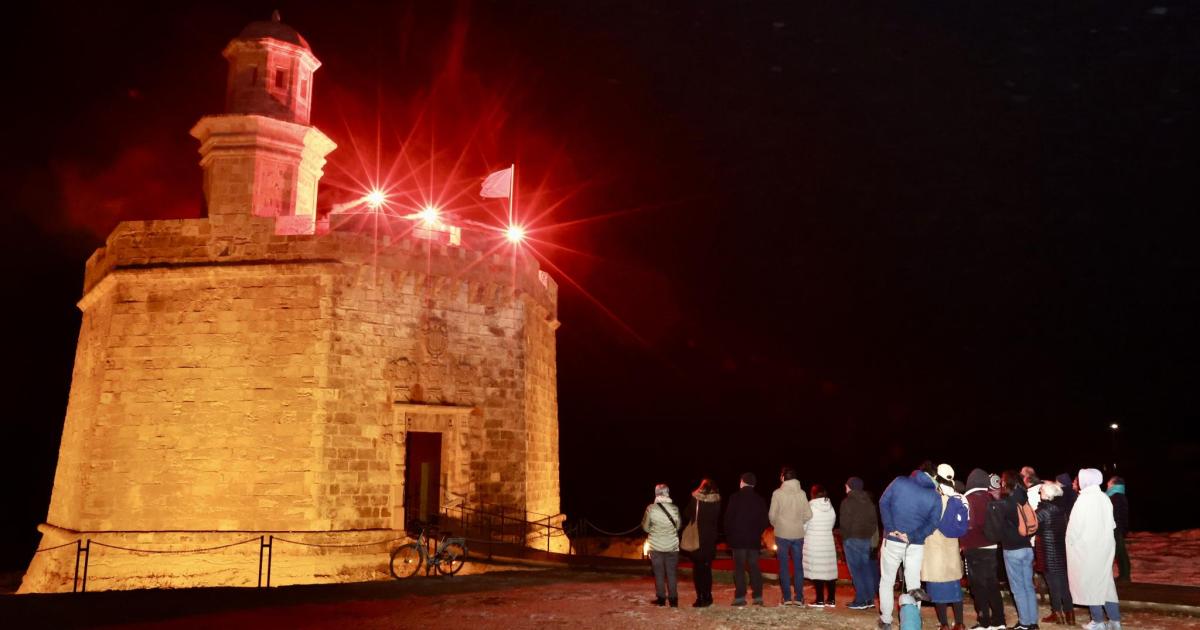


Menorca’s Coastal Monuments Illuminate Human Rights Message Despite Weather Challenges
The event took place at noon at the Castle of Sant Antoni in Fornells.
Menorca renewed its symbolic commitment to human rights this Saturday through the “Burning of Towers, Talaies and Talaiots” initiative, though adverse weather conditions partially disrupted the planned ceremonies. While rain forced cancellation of the Maó event at Sant Roc Bridge, Fornells and Ciutadella successfully hosted poignant gatherings at historic coastal monuments.
Dual Ceremonies with Cultural Resonance
In Fornells, approximately thirty attendees witnessed students from the local public school recite peace-themed poetry at Sant Antoni Castle. The ceremony gained musical dimension through performances by Erick Valenzuela (piano) and Iris Pérez (saxophone) from the School of Music. Amnesty International representatives delivered the event’s central manifesto, maintaining a 15-year tradition that transforms Menorca’s prehistoric stone structures into beacons of contemporary social justice.
Twilight Vigil in Ciutadella
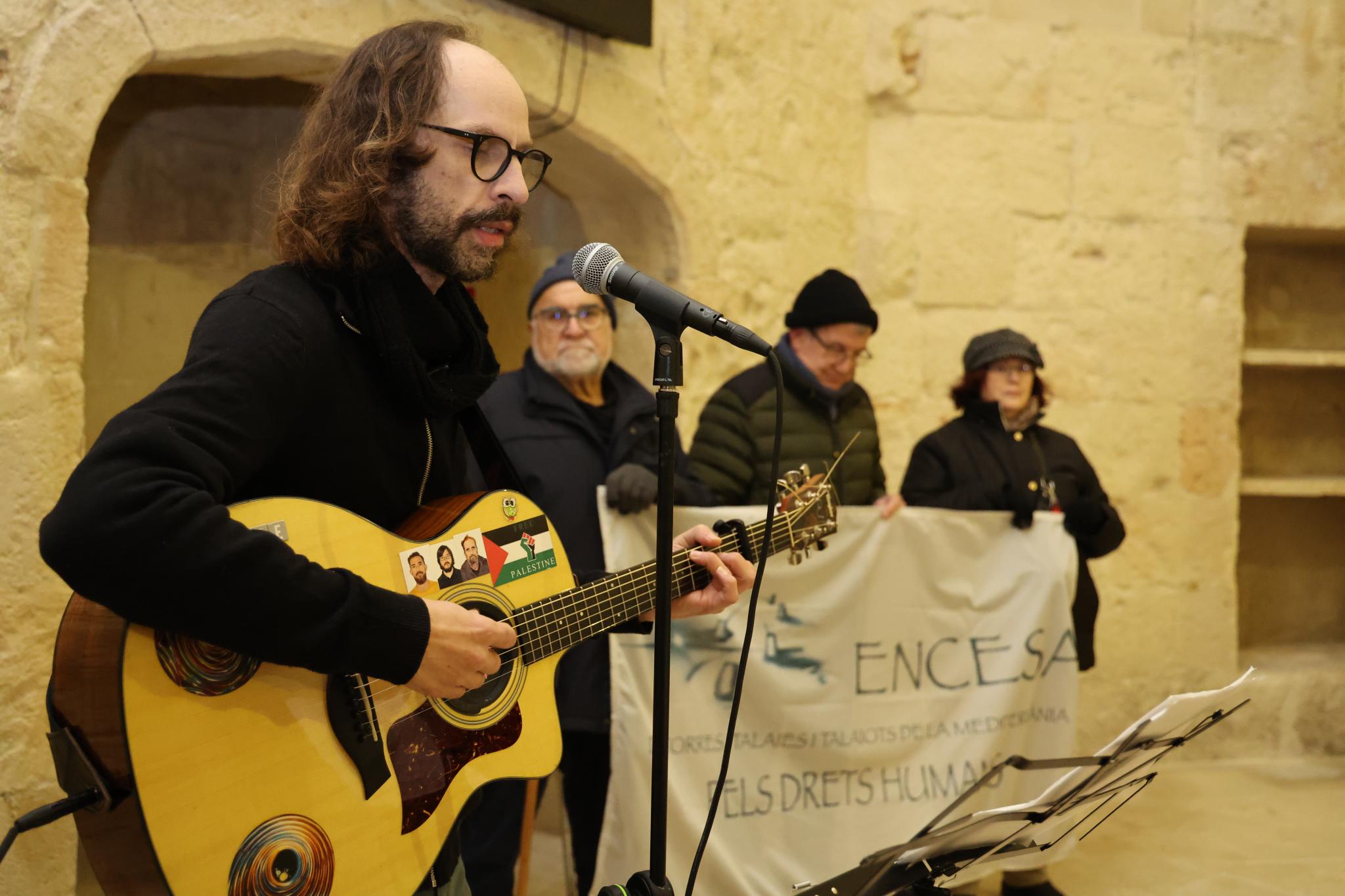
Leonmanso provided musical accompaniment at Ciutadella’s lighting ceremony. | Katerina Pu
As sunset colored the western sky, Ciutadella’s Sant Nicolau Castle hosted its own ceremony attended by new Mayoress Maria Jesús Bagur. The mayor emphasized the urgency of human rights advocacy during her introductory remarks, stating: “In our current climate of global uncertainty, defending fundamental human dignity becomes non-negotiable.” Representatives from the Ciutadella Pensioners’ Platform read the manifesto while musician Leonmanso provided atmospheric accompaniment.
Manifesto Core Principles
The joint declaration, read at both locations, contained several galvanizing assertions:
- “Each flare affirms the Mediterranean must be a space for life, not death – a bridge of humanity rather than a border of pain”
- “No person is illegal. Fear and hatred cannot govern our seas or hearts”
- “We reject the criminalization of humanitarian rescue operations”
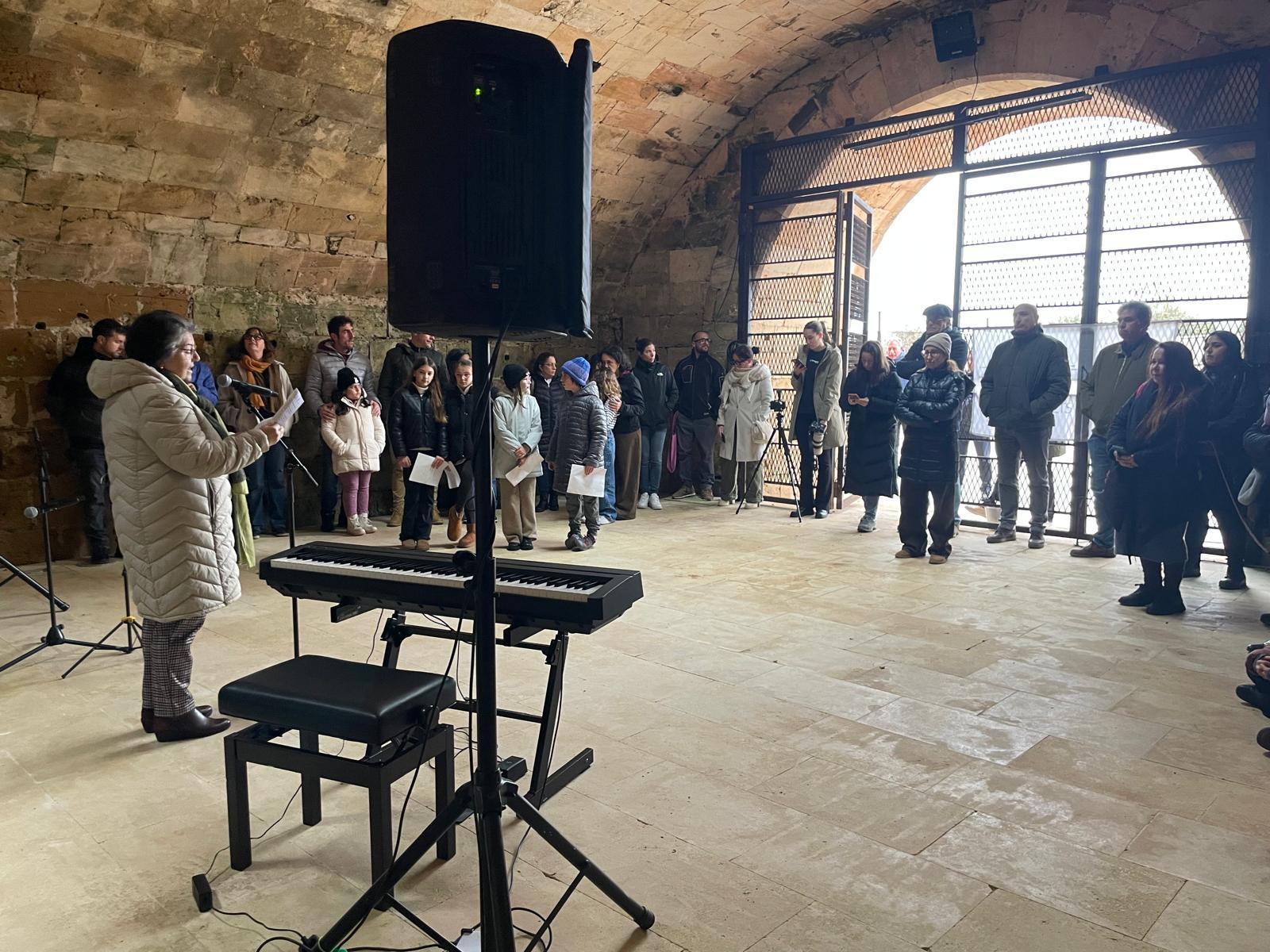
Approximately thirty participants attended the Fornells gathering.
The manifesto specifically addressed Mediterranean migration realities, declaring: “We cannot permit any sea to become an invisible graveyard or trench of hatred.” It framed the lighting ceremonies as communal resistance against indifference, emphasizing that “human rights constitute the foundation of our social contract, not negotiable privileges.”
Limited Municipal Engagement Noted
The article notes only three municipal councils actively participated in this year’s initiative, raising questions about institutional commitment to the cause. Since its 2007 inception, the event has sought to repurpose Menorca’s 1,500+ Bronze Age stone structures – originally built for defense and surveillance – as symbols of unity and humanitarian vigilance.
Archaeologist Marc Simó, unaffiliated with the event, contextualized its significance: “These talaiots have watched over our island for millennia. Their temporary illumination creates powerful visual metaphors for societal vigilance – particularly poignant given Menorca’s central position in Mediterranean migration routes.”
Despite participation challenges, organizers emphasized the ceremonies’ forward-looking dimension: “Each lighting represents hope that our sea may again become a shared home rather than a contested frontier.”
Images Credit: www.menorca.info