

The hospital Quirónsalud Palmaplanas and the Rotger Clinic have introduced a cutting-edge fusion biopsy system that significantly enhances diagnostic accuracy compared to traditional procedures. This innovative technology combines images from magnetic resonance imaging (MRI) with real-time images from a transrectal ultrasound examination in the operating room, providing a three-dimensional representation of the prostate. This allows for the precise identification of lesions and targeted tissue sampling, resulting in more reliable diagnoses and personalized treatment plans.
According to Dr. Juan Pablo Burgués, the fusion biopsy system is the most advanced on the market, featuring elastic image fusion software that corrects prostate deformations caused by the insertion of the transrectal probe or puncture needle. This enables optimal image fusion and precise needle placement, reducing the risk of false negative results and increasing the accuracy of malignant lesion detection by 30%. The procedure is performed on an outpatient basis, under sedation, with a transperineal access that minimizes the risk of infection.
The advantages of fusion biopsy include reduced false negative results, increased diagnostic accuracy, and a lower risk of infection. Patients can return to normal activities within 24 hours, and the need for repeat biopsies is minimized. Dr. Burgués notes that over 40 cases have already demonstrated significant improvements in diagnostic precision. This procedure is recommended for patients with suspicious lesions on MRI or those in active monitoring programs.
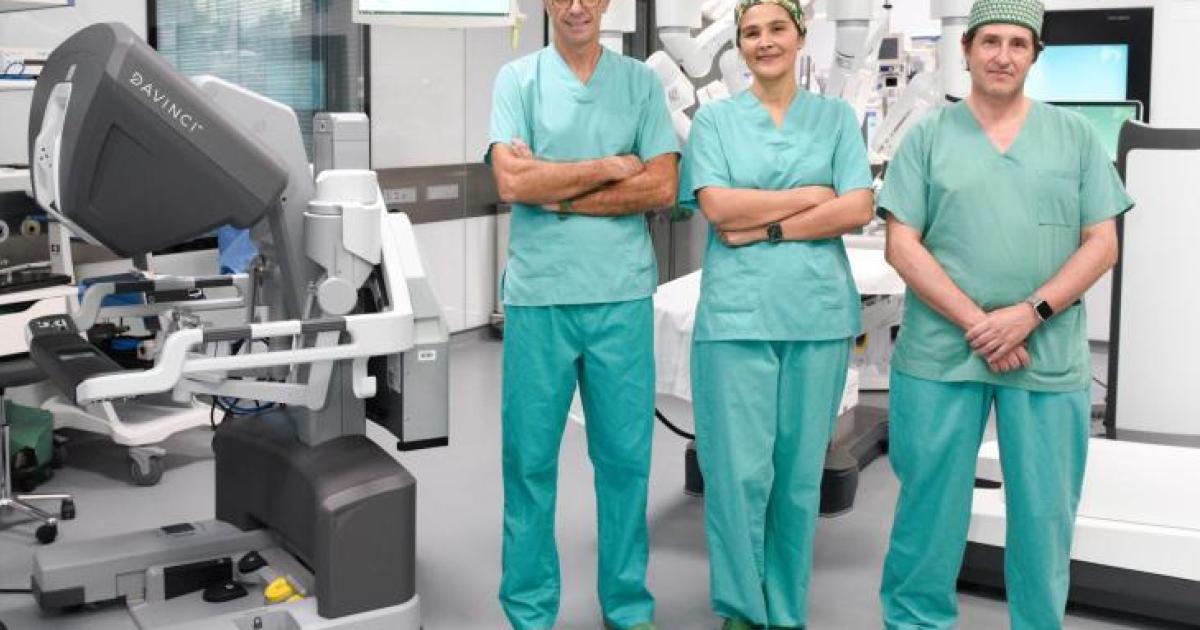
In addition to fusion biopsy, the Rotger Clinic offers robot-assisted prostate surgery, which provides better results in terms of bladder function control and sexual function restoration. The clinic’s team of specialists develops personalized therapeutic strategies based on each patient’s diagnosis and priorities. If prostatectomy is indicated, access to robot-assisted surgery is immediate, without waiting lists.
Dr. Marta de la Cruz, an expert in prostate surgery at Clínica Rotger, highlights the benefits of the robotic approach, including precise movements, three-dimensional HD views, and reduced side effects. Numerous studies have shown that robotic surgery improves erectile function restoration in patients under 60, with high-precision techniques enabling nerve bundle-preserving surgery. Urinary continence is also regained, with success rates of almost 95% within three months.
Robot-assisted surgery offers numerous advantages, including less blood loss, shorter hospital stays, fewer complications, and faster recovery times. Dr. Alfred Mus, a urologist at Clínica Rotger, confirms that the robotic approach demonstrates superiority in preserving urinary continence and sexual function. In countries like the United States, over 85% of prostate operations are performed with robotic support.
Dr. Juan Pablo Burgués emphasizes that offering this technology represents a significant improvement in patient care. The robotic system facilitates the surgeon’s work, allowing for smaller incisions, lower infection rates, less postoperative pain, and shorter hospital stays. Overall, the introduction of fusion biopsy and robot-assisted surgery in prostate cancer treatment contributes significantly to improved patient safety, better disease treatment, and higher survival rates with improved quality of life.
For more information, visit Quirónsalud or Clínica Rotger. Read more about the benefits of fusion biopsy and robot-assisted surgery Here.
Images Credit: www.mallorcamagazin.com