

Exploring the Twin Suburbs of Sant Felip: Historian Xavier Martín Reveals Forgotten Settlements
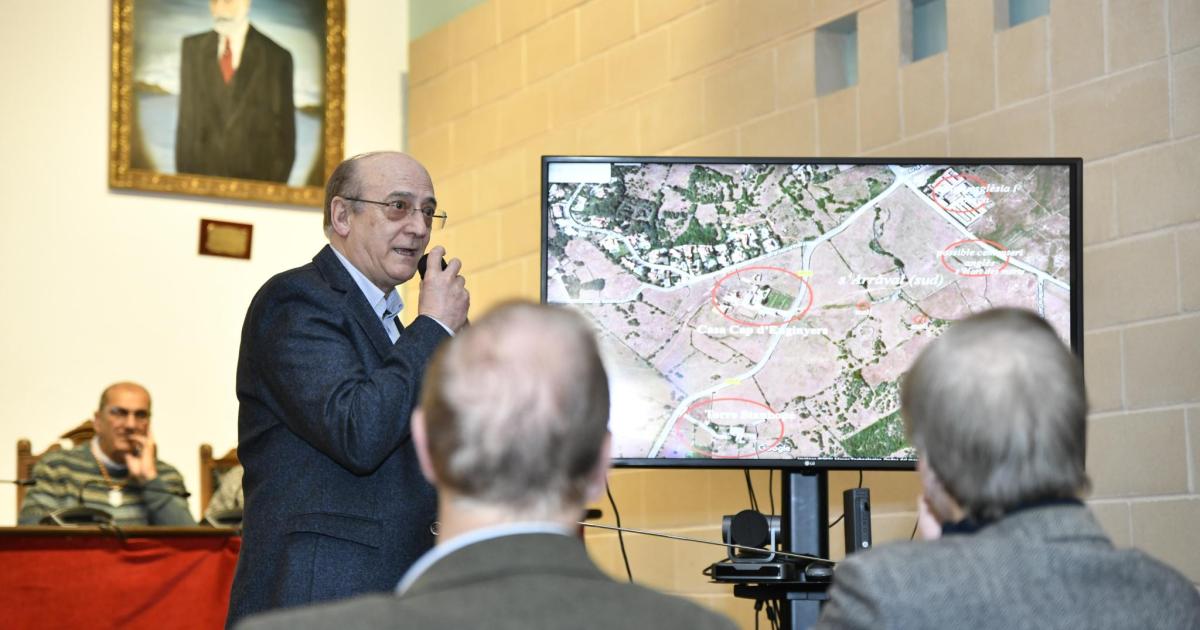
Image: The public filled Ajuntament des Castell’s meeting room for this historical exploration
Unearthing Menorca’s Military Past
Professor and historian Xavier Martín captivated audiences yesterday during a special conference commemorating the 255th anniversary of des Castell’s foundation. Drawing from previously unpublished historical documentation and verified published sources, Martín offered groundbreaking insights into Sant Felip’s twin suburbs – particularly the second settlement now occupied by des Castell’s municipal cemetery.
The Castle That Created a Community
“The first suburb emerged directly from Sant Felip Castle’s construction,” Martín explained, correcting common historical misconceptions. Military engineer Giovanni Batista Calvi initiated work in 1555 after completing Dalt Vila fortress in Ibiza, later joined by his brother Fermo Calvi to complete the project under King Felipe II’s orders. The identical design between both fortresses reveals Spain’s standardized military architecture of the period.
Life in the First Settlement
Martín detailed how scattered families established themselves near the fortress, worshipping at the Church of Our Lady of the Rose (distinct from the castle’s Assumption chapel). By the 17th century, military strategists recognized the settlement’s vulnerability, with contemporary documents revealing early discussions about relocation – a full century before the move actually occurred.
War Divides the Island
The historian brought to life the island’s bitter division during the 1700-1715 War of Succession: “Sant Felip’s residents uniquely supported Felipe d’Anjou while the rest of Menorca backed Charles III.” This allegiance created lasting tensions, with other island communities condemning Sant Felip’s inhabitants for supporting what they viewed as Bourbon-sanctioned violence during the conflict.
Mapping the Second Settlement
Using aerial projections, Martín pinpointed the second suburb’s exact location – now occupied by des Castell Cemetery. He reconstructed the area’s historical thoroughfares:
- The Old Road (now running through des Castell to Santa Anna)
- Camí Nou (Royal Road, current Sant Felip route)
Northern Settlement Features
Martín’s research revealed key structures in the northern sector:
- The original church (demolished by English forces)
- Fishermen’s houses and plaster mill
- Sant Diego Tower (alternately called King’s Tower or s’Aigua Tower) with distinctive hexagonal base
- French-era cemetery and ball game area
Southern Settlement Revealed
Toward Sant Lluís road, Martín identified:
- Twin mills and chief engineer’s residence
- Governor’s Tower (now called Old Tower)
- New Tower and potential English burial ground (“Hort des Morts”)
Daily Life in the Suburbs
Martín reconstructed neighborhood life through property records, identifying residents like the Vacarisses, Papelcudi, and Dalmedo families, plus colorful figures like fisherman Jordi “Panxeta”. His mapping located essential services:
- Apothecary and bakery positions
- Barber shop and fishing quarters
- Dual slaughterhouse system at es Pouet and Cala Corb
Archaeological Evidence
The historian highlighted material evidence supporting his findings, including flint fragments at es Pouet used for pistol hammers – physical proof of the settlement’s military-industrial activities.
Modern Connections
Martín concluded by linking historical infrastructure to contemporary features, noting how Sant Esteve Cove’s ravine served as both natural drainage and supply route for goods entering the settlement – a hydrological feature still visible today.
The evening concluded with pianist Dani Molina’s performance, blending cultural celebration with historical revelation. Martín’s decade-long research provides the most comprehensive understanding to date of these vanished communities that shaped Menorca’s development.
Source: Original conference coverage
Images Credit: www.menorca.info