

The Hidden Legacy: Antoni Gaudí’s Overlooked Mastery in Mallorca’s Cathedral
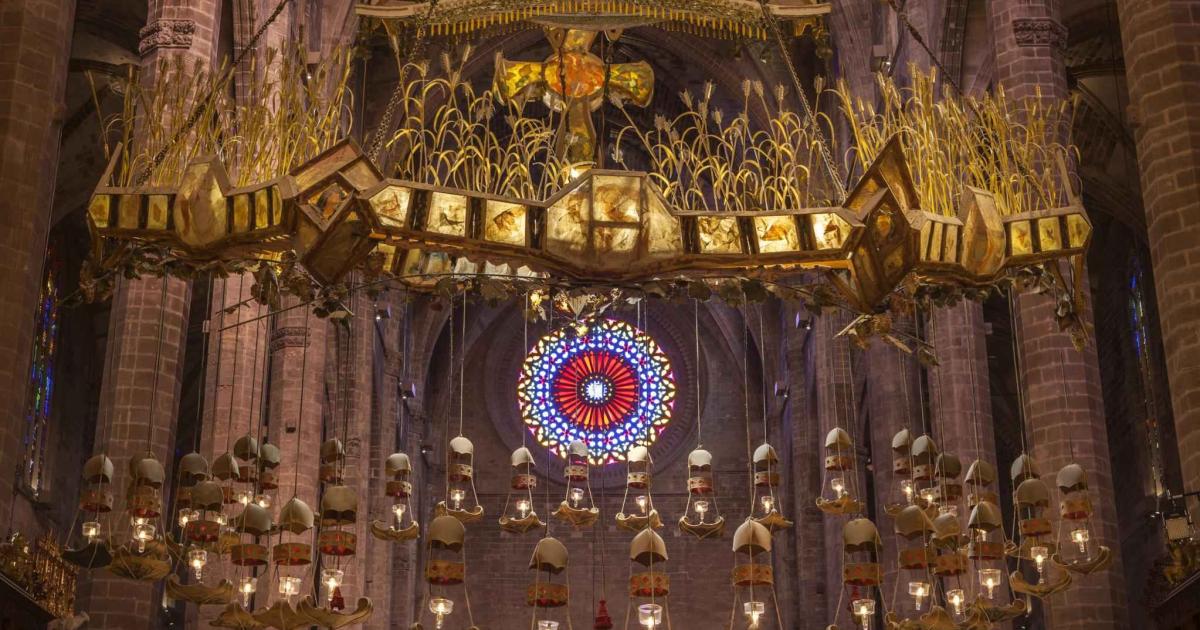
Gaudí is credited, among other things, with the metal chandeliers in the cathedral. Photo: Catedral de Mallorca
Few visitors to Palma de Mallorca’s Cathedral realize they’re walking through spaces transformed by Antoni Gaudí (1852–1926), the visionary Catalan architect whose centenary of death approaches in 2026. His contributions here – subtle yet revolutionary – demand a keen eye to uncover, from four tulip flowers carved into limestone window corners to the cathedral’s dramatic restructuring. Art historian Mercé Gambús explains: “He gave the cathedral a scenographic meaning,” a theatricality that redirected focus to the altar while honoring the Gothic structure’s scale.
Gaudí’s Invisible Hand: Lighting, Space, and Symbolism
Commissioned by Bishop Pere Joan Campins in 1904, Gaudí’s decade-long project modernized the cathedral’s functionality and aesthetics. His most radical act? Introducing electric lighting to counteract the “eternal twilight” created by sealed windows. By reopening these apertures and adding wrought-iron chandeliers (shown above), he balanced medieval grandeur with modernist innovation.
Key interventions included:
- Relocating the central choir to maximize altar visibility
- Designing the polychrome ceramic bishop’s throne area
- Crafting the ephemeral-looking canopy above the altar (wood, paper, textiles)
- Installing mosaics and botanical-themed metalwork
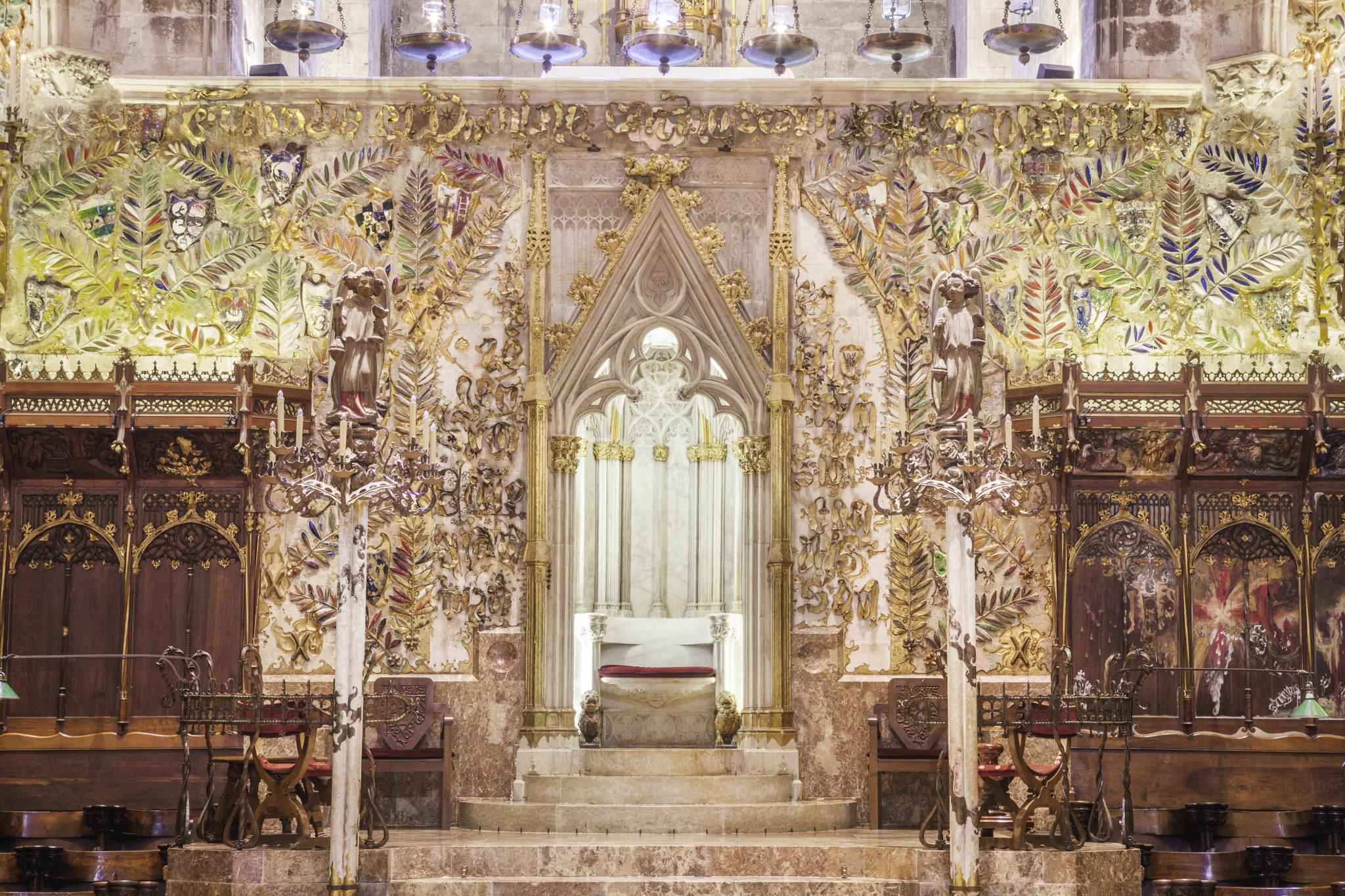
The bishop’s seat with rich, floral ceramic decorations. Photo: Catedral de Mallorca
Controversy and Unfinished Dreams
Gaudí’s work faced fierce resistance from Mallorca’s conservative circles. Architect Guillermo Forteza publicly criticized his “arbitrary decorations,” arguing they clashed with the cathedral’s Gothic essence. Tensions peaked in 1914 when Gaudí abandoned the project after Bishop Campins’ death and disputes with local contractors, leaving elements unrealized.
Beyond the Cathedral: Gaudí’s Island-Wide Influence
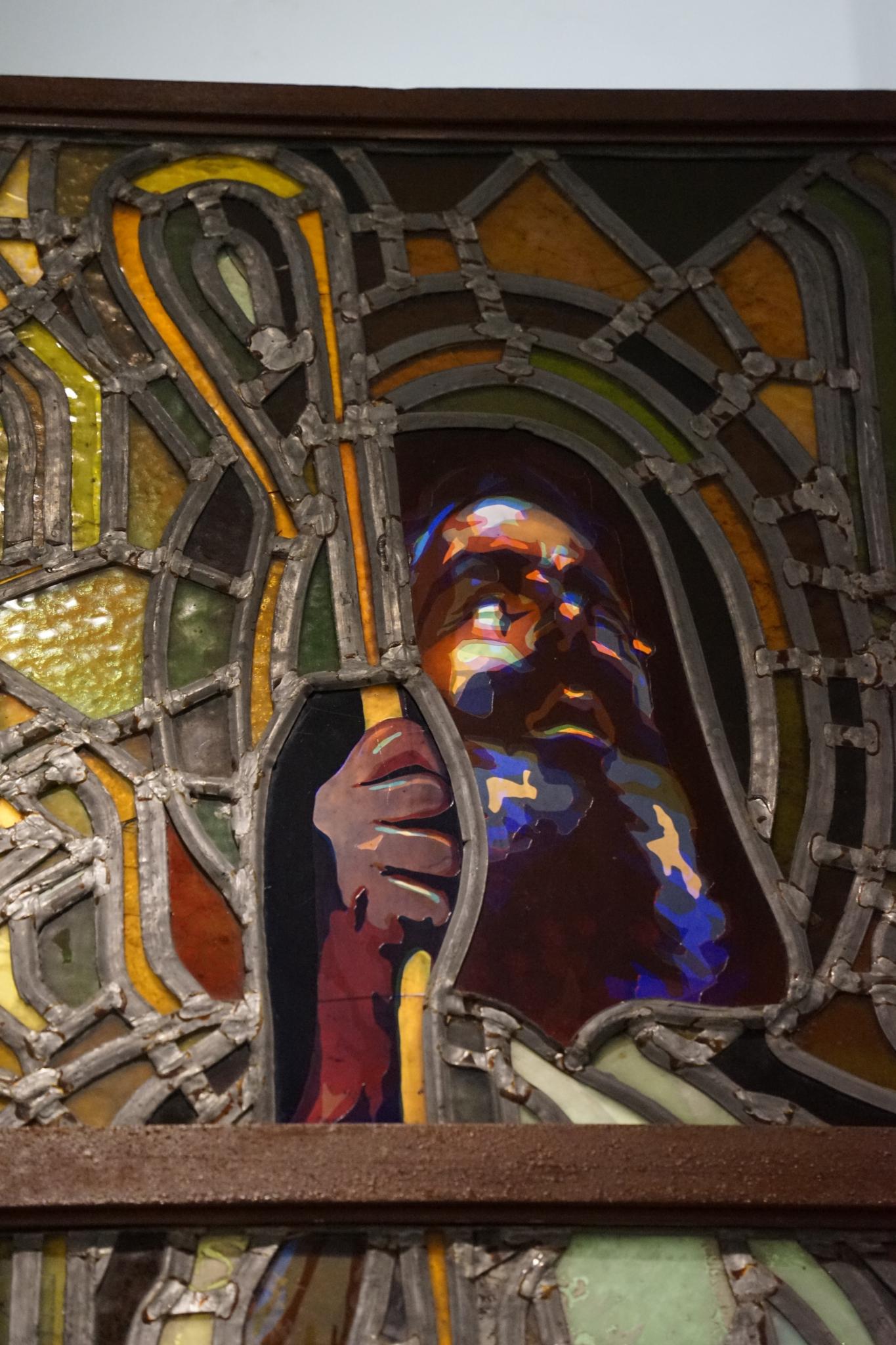
This window in the Bishop’s Palace is also by Gaudí. Photo: Catedral de Mallorca
Gaudí’s legacy extends to neighboring landmarks like the Bishop’s Palace, where a sea-facing balcony exhibits his signature modernist curves. The adjacent Museu d’Art Sacre displays additional works, including liturgical seating and stained glass. Further afield, scholars like biographer Josep Maria Tarragona credit Gaudí with conceptual designs for:
- The Sanctuary of Lluc’s church interior redesign (1908)
- The Rosary Mountain sculptures near Lluc
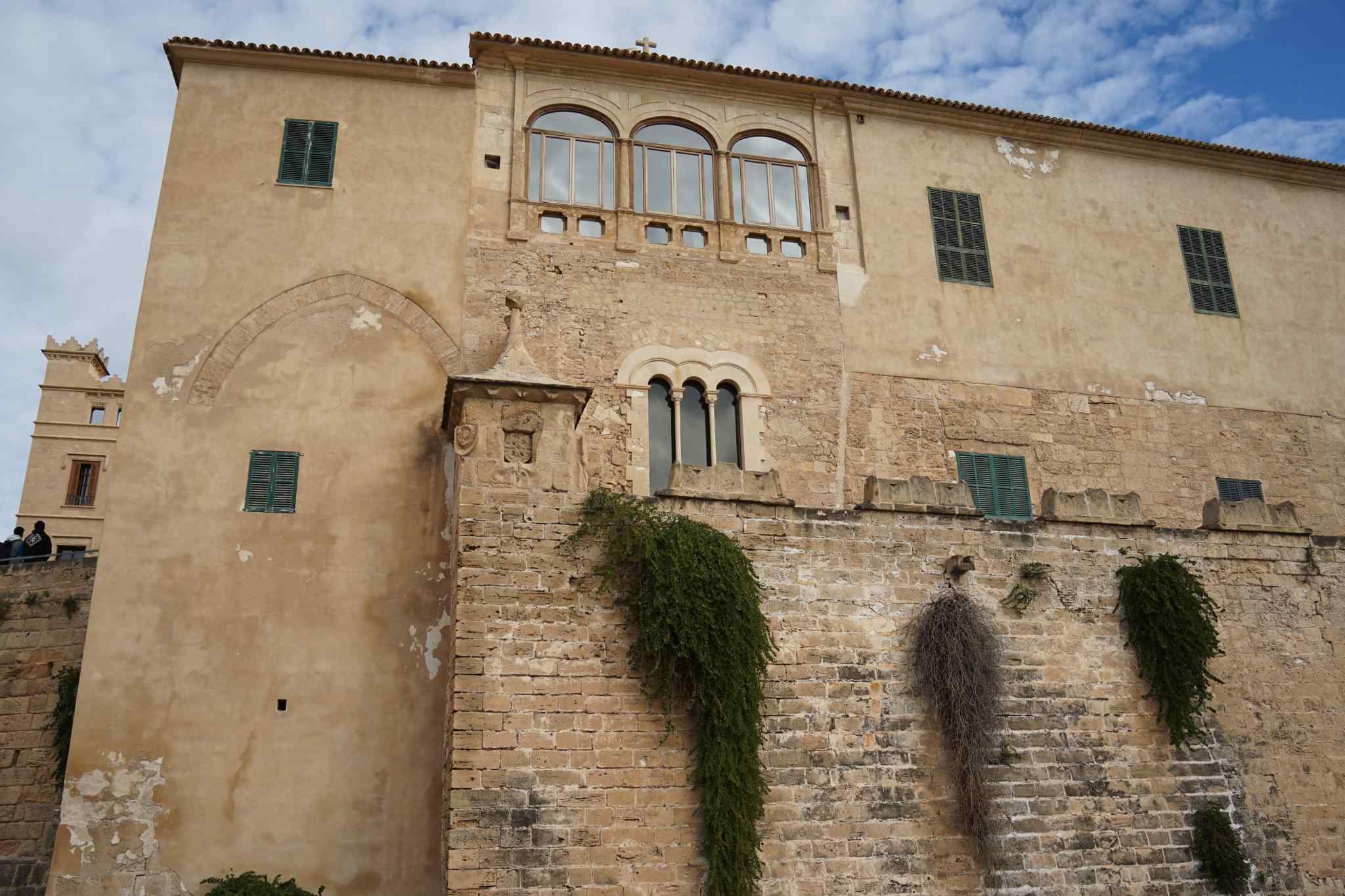
The Bishop’s Palace is next to the cathedral. Photo: jm
Why Palma’s Cathedral Matters in Gaudí’s Story
Unlike Barcelona’s Sagrada Família, Mallorca’s cathedral allowed Gaudí to reimagine a historic monument – a rare opportunity his Barcelona patrons never granted. As Gambús notes, this project fused his deep Catholicism with structural daring, evident in how he prioritized communal worship through spatial drama.
Today, appreciating Gaudí’s Mallorcan work requires patience. The tulips on the facade, the bishop’s floral ceramics, and the Lluc sculptures reveal themselves only to those who study their context – a fitting tribute to an architect who believed beauty lived in details.
Source: Mallorca Magazin (with additional historical context from Gaudí experts Pere-Joan Llabrés and Josep Maria Tarragona).
Images Credit: www.mallorcamagazin.com