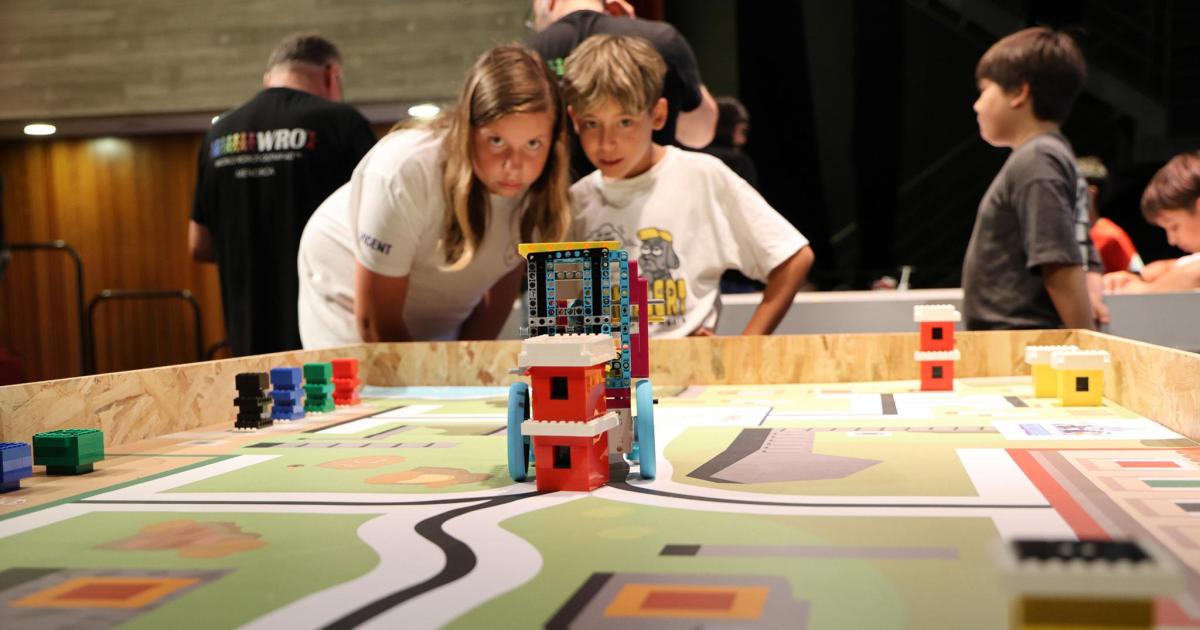


Overview of World Robot Olympiad
The World Robot Olympiad (WRO) started in 2004 with a handful of Asian countries taking part. Since then it has grown into a truly global event, with almost one hundred nations now sending teams each year. The competition aims to inspire young people to explore robotics, programming, and engineering through hands‑on challenges that blend creativity with technical skill.
Origins and Global Reach
From its modest beginnings, WRO has expanded continent by continent, adapting its challenges to local contexts while keeping a common set of rules. The steady increase in participating countries shows how educators and parents see the value of robotics as a gateway to STEM (science, technology, engineering, and mathematics) learning.
Menorca’s Entry
Menorca joined the WRO family in 2020. Although the island is small, its enthusiastic community of teachers, parents, and volunteers quickly embraced the competition. The first local event was organized by the Associació de Veïns Camí de ses Vinyes, TEA Menorca, and the Sant Lluís City Council, setting the stage for yearly preparation days and team formation.
What the Competition Involves
WRO is designed for children and teenagers roughly between eight and nineteen years old. Teams work together to design, build, and program robots that can solve a series of thematic challenges.
Age Groups and Teamwork
Participants are divided into categories such as Elementary, Junior, and Senior, ensuring that the tasks are age‑appropriate while still encouraging collaboration. Each team member contributes ideas, whether it’s mechanical design, coding, or strategy, fostering real‑world teamwork experience.
Challenges and Themes
Every year WRO selects a global theme that guides the challenge statements. Themes range from environmental protection to cultural heritage, pushing students to think about how robotics can address real‑life problems. The theme shapes the mission objectives, scoring criteria, and even the visual design of the competition mats.
Preparation Day in Sant Lluís
On a recent Saturday, the Sala Albert Camus in Sant Lluís buzzed with activity as local teams gathered to fine‑tune their robots ahead of the national qualifiers.
Organizers and Venue
The event was hosted by the same trio that launched Menorca’s WRO participation: the Associació de Veïns Camí de ses Vinyes, TEA Menorca, and the Sant Lluís City Council. Their combined efforts provided tables, power strips, and a supportive atmosphere for testing and troubleshooting.
Participation Numbers
Five teams, comprising fifteen young people, took part in the preparation day. Although Menorca did not yet have enough teams to secure automatic spots for the national final, the organizers remain optimistic about the island’s prospects.
Path to Nationals and Beyond
Success at the local level can open doors to higher stages of the competition.
Qualifying for Andorra Final
Rafa Muñoz, a member of the organizational team, explained that based on the scores earned during the preparation day, two Menorcan teams—one in the Basic category and one in the Elementary category—are likely to earn invitations to the national final in Andorra, scheduled for September.
Dream of World Final in Puerto Rico
If those teams perform well in Andorra, they could advance to the world final, which will be held in Puerto Rico in December. Reaching that stage would place Menorcan students alongside peers from around the globe, showcasing their robotic solutions on an international platform.
This Year’s Theme: “Robots Meet Culture”
The 2024 WRO theme encourages participants to explore the intersection of technology and cultural heritage.
Menorcan Interpretation
Locally, organizers have woven Menorcan traditions into the challenge statements. Teams might be tasked with creating robots that help preserve historic sites, demonstrate traditional crafts, or celebrate local festivals. This approach makes the competition relevant to the island’s identity while still aligning with the global WRO vision.
Educational Impact and Inclusivity
Beyond trophies and rankings, WRO serves as a powerful learning tool.
Promoting STEM Skills
By building and programming robots, participants develop problem‑solving abilities, logical thinking, and familiarity with coding languages and hardware platforms. These skills translate directly to academic pursuits and future careers in technology.
Building Team Spirit
Working in mixed‑age teams teaches communication, leadership, and resilience. Students learn to share ideas, give constructive feedback, and celebrate each other’s successes—lessons that extend far beyond the competition floor.
Conclusion
Menorca’s growing involvement in the World Robot Olympiad illustrates how a small community can tap into a worldwide movement that nurtures curiosity, creativity, and technical competence. With dedicated organizers, enthusiastic young builders, and a theme that links robotics to culture, the island is well positioned to send strong teams to the national finals in Andorra and, hopefully, to the world stage in Puerto Rico. The experience not only prepares students for future STEM challenges but also reinforces the value of collaboration and cultural appreciation in a rapidly changing world.
Source: https://www.worldrobotolympiad.org/ (for more information about WRO)
Images Credit: www.menorca.info