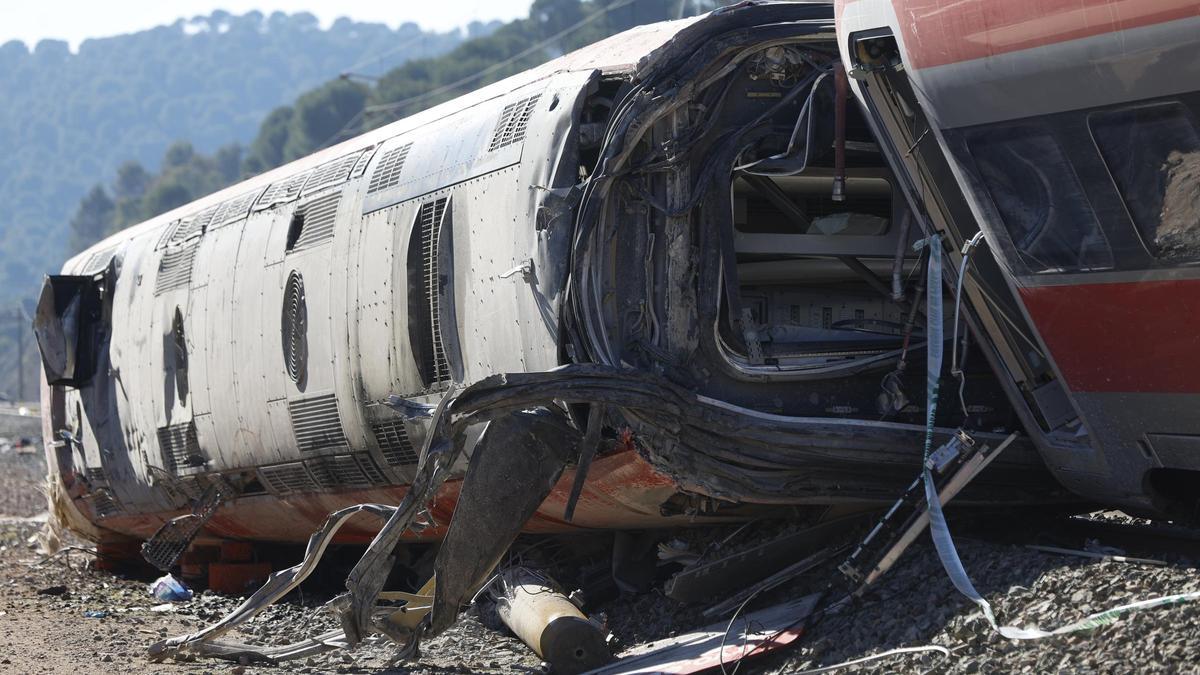


The Railway Accident Investigation Commission (CIAF) works tirelessly to clarify the “file 08/2026“, which refers to the very serious accident that affected two trains in Adamuz, Córdoba, on January 18. A first provisional report published on Friday the 23rd, they delve into another phase with tests “of all kinds” on the material, even “destructive”, added to the documentary analysis. The researchers have self-imposed that next June will be their possible limit for “shed light” about what really happened, although the final report with the definitive conclusions takes longer, as Diario Córdoba, from the Prensa Ibérica publishing group, has advanced.
Focus on Rail Integrity and Maintenance Practices
The primary investigative pathway, though not exclusive, centers on critical questions about a rail fracture at a specific weld joint. CIAF has formally requested information from ADIF (Spain’s rail infrastructure manager) and other involved entities through official “letters,” demanding answers to fundamental questions including:
- The methodology behind the controversial weld’s installation
- Potential presence of air pockets or impurities in the weld material
- Rationale for cutting and reattaching a rail segment
- Detailed documentation of the Madrid-Seville line’s renewal process after 30 years of service
Corporate Accountability in Focus
ADIF faces immediate scrutiny as investigators await their preliminary technical report. Rail operators Ilsa (parent company of Iryo) and Renfe Viajeros must also respond to CIAF’s technical inquiries. Critical evidence remains inaccessible pending judicial authorization – the Montoro court (Córdoba) overseeing preliminary proceedings must approve examination of the trains’ black boxes containing operational data.
Judicial Oversight and Evidence Preservation
Judge María del Carmen Troyano maintains transparent proceedings despite the case’s complexity, having not imposed summary secrecy to date. However, strict protocols govern material evidence custody. CIAF President Iñaki Barrón emphasized in a January 26 interview at the College of Civil Engineers: “All evidence pieces meet chain-of-custody standards mandated by judicial authorities. Every expert handling materials must sign formal access records.”
Destructive Testing Protocol
Late January saw experts finalize laboratory selection for specialized examinations. Barrón confirmed: “Certain destructive tests requiring material fragmentation will be conducted under certified forensic conditions. Only through these verified procedures can we definitively determine failure mechanisms.”
Welding Forensics: A Critical Path
Investigators concentrate on whether the rail fracture originated from:
- Inherent steel composition flaws or metal fatigue
- Defects in the aluminothermic welding process
Barrón stressed weld integrity’s critical nature: “Aluminothermic welding demands specialized expertise with zero margin for error. We’re scrutinizing installation records – technician identities, temperatures, procedural compliance – alongside post-installation inspection logs.”
The “Coke” Hypothesis
A working theory suggests weld contamination created a structural weakness. Investigators identified a minor surface irregularity potentially indicating gas pockets or foreign material intrusion during the welding process. CIAF has submitted detailed technical questionnaires to the responsible welding contractor regarding installation protocols and quality controls.
Operational Timeline Reconstruction
With 46 victims formally identified and state funeral arrangements deferred per families’ requests, investigators face compounding pressures. Amid political tensions following Transport Minister Óscar Puente’s parliamentary exchanges, CIAF maintains operational focus on temporal and spatial factors:
- The unprecedented coincidence of two high-speed trains occupying adjacent tracks simultaneously
- Braking dynamics at 200 km/h requiring ≈2 km stopping distances
- Potential kinetic energy transfer between derailed Iryo cars and the approaching Alvia train
Black Box Data Implications
Barrón outlined temporal challenges: “Initial evidence suggests the Alvia collision occurred before the Iryo fully stopped. Black box analysis will precisely reconstruct the 3-second sequence from derailment to impact.” Legal approval remains pending for data extraction from both trains’ event recorders.
As parallel judicial and technical investigations progress, CIAF maintains its June deadline for preliminary findings while acknowledging final conclusions may extend into late 2026. All developments remain subject to judicial validation in Córdoba’s concurrent criminal investigation.
Original reporting: Diario de Ibiza
Images Credit: www.diariodeibiza.es