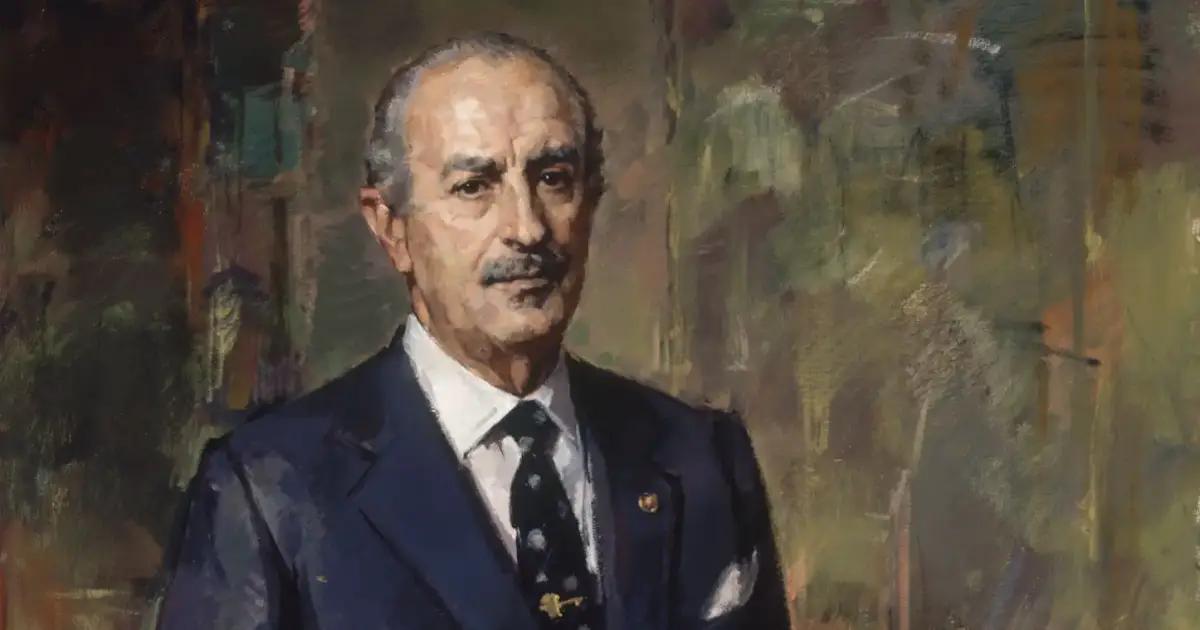


Who Was Alejandro Rodríguez de Valcárcel?
Alejandro Rodríguez de Valcárcel (1917‑1976) was a Spanish lawyer and politician who held several important posts during Franco’s regime. He studied law in Salamanca, joined the Spanish University Union in 1934, and later became a member of the Falange Española. Over the years he served as civil governor in various provinces, including the Balearic Islands, and eventually became president of the Cortes (the Spanish parliament) from 1969 to 1975.
Family Roots in Menorca
His wife, María Teresa Gavilán Alonso, came from a well‑known Menorcan family. Her father, Marcelino Gavilán Bofill, was a doctor born in Maó who later taught otorhinolaryngology in Valladolid. Because of this connection, Rodríguez de Valcárcel spent many summers on the island.
Life on the Island
During the 1960s and up to his death in 1976, the couple enjoyed their holidays at a house in Binibèquer. They also visited Menorca during Holy Week, attending the Easter Sunday tradition of “Deixem lo dol” in Sant Lluís, a musical performance led by local musician Tomé Coll.
Official Role: Civil Governor of the Baleares
In 1952‑1953 Rodríguez de Valcárcel served as the civil governor of the Balearic Islands. While in this position he participated in a ceremony honoring Admiral David Glasgow Farragut in Ciutadella. The event took place on June 27, 1953, and included the presentation of a portrait of the admiral and a commemorative plaque.
The Incident That Cost Him the Post
On the same day as the Farragut tribute, a tragic accident occurred at the Llucalari coastal battery in Alaior, where a Vickers cannon exploded, killing 23 soldiers. Rodríguez de Valcárcel chose to attend the Farragut ceremony instead of the funerals for the fallen troops. The Minister of the Army, Lieutenant General Agustín Muñoz Grande, viewed this as a serious neglect of duty and sent him a telegram that read: “In Maó they have been waiting for you for 23 dead and the Army Minister.” As a result, he was removed from his post as civil governor.
Legacy and Historical Memory
Decades later, the Spanish Congress decided to remove portraits of Franco‑era presidents of the Cortes, including Rodríguez de Valcárcel’s, from its walls. The move, approved by the PSOE and Sumar parties with the PP’s abstention, reflects a broader effort to reassess symbols linked to the dictatorship.
Why It Matters for Teens
Understanding figures like Rodríguez de Valcárcel helps us see how personal choices, family ties, and political responsibilities intersect. His Menorcan connections show that even national officials had local roots, and the controversy over his portrait reminds us that societies continuously reinterpret their history.
Conclusion
Alejandro Rodríguez de Valcárcel’s life was marked by a blend of national political service and deep personal links to Menorca. His summers in Binibèquer, participation in island traditions, and the controversial decision that ended his governorship all paint a picture of a man caught between duty to the state and attachment to his wife’s homeland. The recent removal of his portrait from the Congress highlights ongoing debates about how Spain remembers its Francoist past.
Reference: Source
Images Credit: www.menorca.info