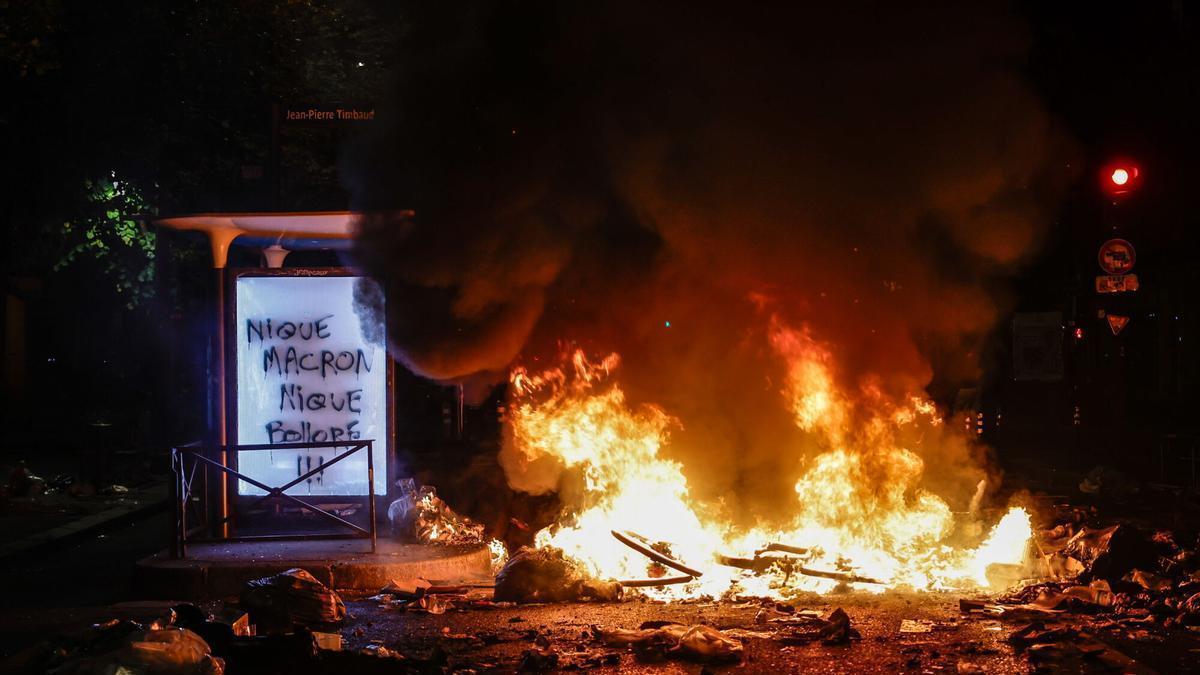


**What’s Happening in France?**
France’s streets have been buzzing with protests after a weekend of unrest. Demonstrators are angry about rising living costs and cuts to public services, and the turmoil is shaking the country’s financial markets.
**Why the Protests Started**
– **Cost‑of‑living squeeze:** Inflation jumped from 2.4 % in August to 3.1 % in September, making everyday goods more expensive.
– **Public‑service worries:** Students and workers say schools, hospitals and transport are deteriorating.
– **Political backdrop:** Prime Minister Sébastien Lecornu leads a government without a clear majority in the National Assembly, and presidential elections are looming in 2027.
**Market Reaction**
– **Paris stock exchange (Bourse de Paris):** Opened down about 1.4 % as investors pulled back from French stocks and bonds.
– **Government borrowing costs:** The yield on France’s 10‑year bond rose close to 5 %, a level not seen since 2002. The spread versus German bonds widened to roughly 160 basis points, reflecting higher perceived risk of default.
– **Debt‑to‑GDP ratio:** France’s public debt sits around 119 % of GDP, limiting how much the state can borrow to meet new demands.
**Government’s Response**
Prime Minister Lecornu unveiled a budget plan aiming to cut the deficit from 5.4 % to 5 % of GDP. To save about €43 billion, the proposal includes:
– **Health‑care spending caps**
– **Freeze on public‑sector wages**
– **Limiting pension increases for those earning over €1,260 a month**
These measures have met strong resistance on the streets.
**Impact on Businesses**
Companies with high exposure to consumer activity are feeling the heat:
– **Carrefour:** CEO Alexandre Bompard said damages could run into “hundreds of millions” of euros, with around 20 stores looted (about 0.7 % of its French network). Carrefour’s share price slipped roughly 2 % on Monday.
– **Other sectors:** Retail, banking and defense stocks also slid as investors worry about further disruption.
**What Experts Say**
Manuel Pinto, chief strategist at broker XTB, notes that France faces a tough mix: growing social demands alongside shrinking fiscal space. Ofi Invest Asset Management adds that investor sentiment has deteriorated, citing France’s weakest growth among the eurozone’s four largest economies and uncertainty over budget reforms.
**Looking Ahead**
If protests continue, the government may need to reconsider its austerity plans or risk deeper market turbulence. Conversely, finding a compromise that addresses citizens’ concerns while keeping finances sustainable could calm both the streets and the stock markets.
**Reference**
Source
Images Credit: www.diariodeibiza.es