

Exploring Son Catlar: A Window into Menorca’s Past
Why Son Catlar Matters
Son Catlar is more than just an archaeological site; it is a living timeline that stretches over 2,000 years of Mediterranean history. From the earliest Talayotic settlements to Roman influences and beyond, the layers of occupation tell a story of cultural exchange, adaptation, and resilience.
A Site Still Waiting to be Fully Uncovered
Archaeologist Majo León points out that Son Catlar “has barely been excavated.” This means that much of its potential remains hidden beneath the soil, promising new discoveries for future researchers. The limited, targeted excavations carried out so far have already answered specific questions, especially about the site’s impressive fortifications.
The Mighty Wall: A Defensive Masterpiece
One of Son Catlar’s standout features is its massive wall, stretching about a kilometer in length. Fernando Prados highlights the wall’s extraordinary state of preservation, which has allowed scholars to reconstruct, for the first time, how a Talayotic fortification functioned. Recent work revealed:
- The north door excavation
- An elbow‑shaped entrance designed to hinder attackers
These findings turn the wall into a laboratory for studying ancient military organization and defensive strategies.
From Talayotic to Roman: A Continuous Story
Helena Jiménez explains that the site’s continuous occupation from the Talayotic era through the Roman period offers a rare opportunity to observe how a community evolved over centuries. This continuity shows not only what the settlement looked like at its inception but also how its original culture interacted with later arrivals, making Son Catlar a true cultural crossroads.
Daily Life Awaits Discovery
While the fortifications have received much attention, the next phase of research will focus on the interior. Fernando Prados notes that upcoming five‑year plans aim to explore homes, domestic spaces, and activity areas. Understanding daily life will shed light on how inhabitants ate, worked, and interacted with their environment.
A Book That Bridges Scholarship and the Public
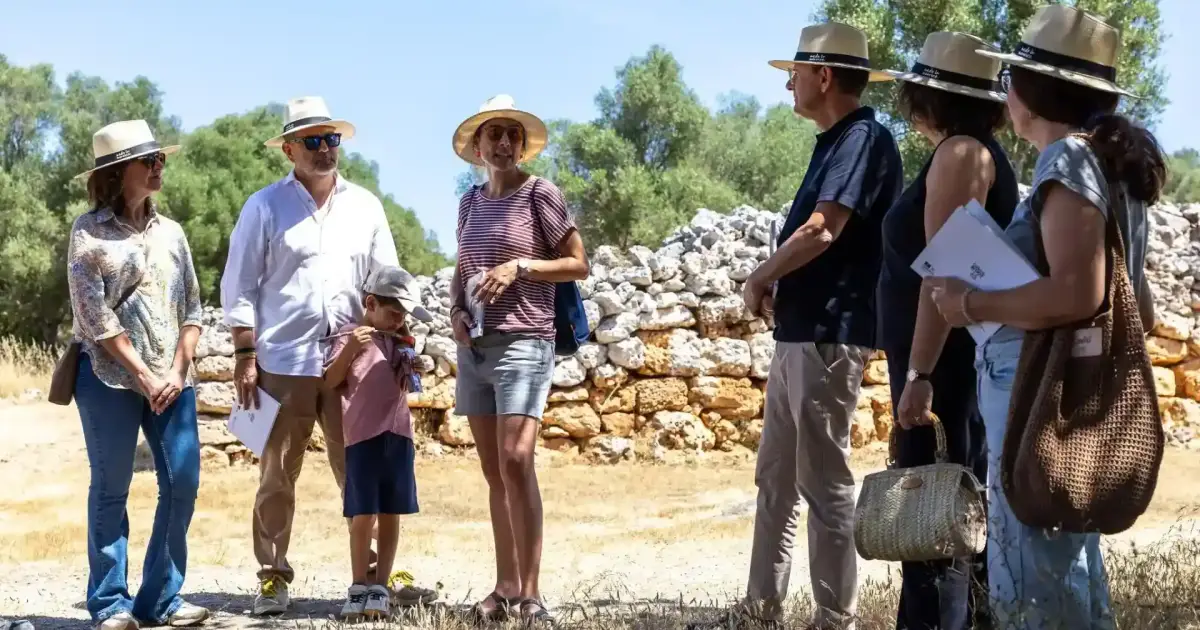
The recently published work An archaeological tour of Son Catlar—authored by Helena Jiménez, Majo León, Fernando Prados, and Joan Carles de Nicolás—belongs to the Col·leccio Sitjot series. Presented on site during a visit attended by fifty people, the book:
- Summarizes over a century of study (first documented work dates back to 1924)
- Uses an informative, accessible tone aimed at a general audience
- Highlights the site’s largest taula sanctuary and up to five talayots
The Sitjot Collection’s Ninth Volume
Son Catlar marks the ninth publication in the Sitjot Collection, which began in 2007. This volume adds to a growing body of literature that makes Menorca’s rich heritage accessible to scholars and enthusiasts alike.
Conclusion
Son Catlar stands as a testament to the island’s layered past. Its well‑preserved fortifications, continuous occupation from Talayotic to Roman times, and untapped interior promise to keep revealing new chapters of Menorca’s story. Ongoing research and publications like the recent tour guide ensure that this remarkable site will continue to educate and inspire both experts and the public for years to come.
Source: Insular Council – Col·leccio Sitjot Publication
Images Credit: www.menorca.info