

Discovery at Torre d’en Galmés
The Excavation Team
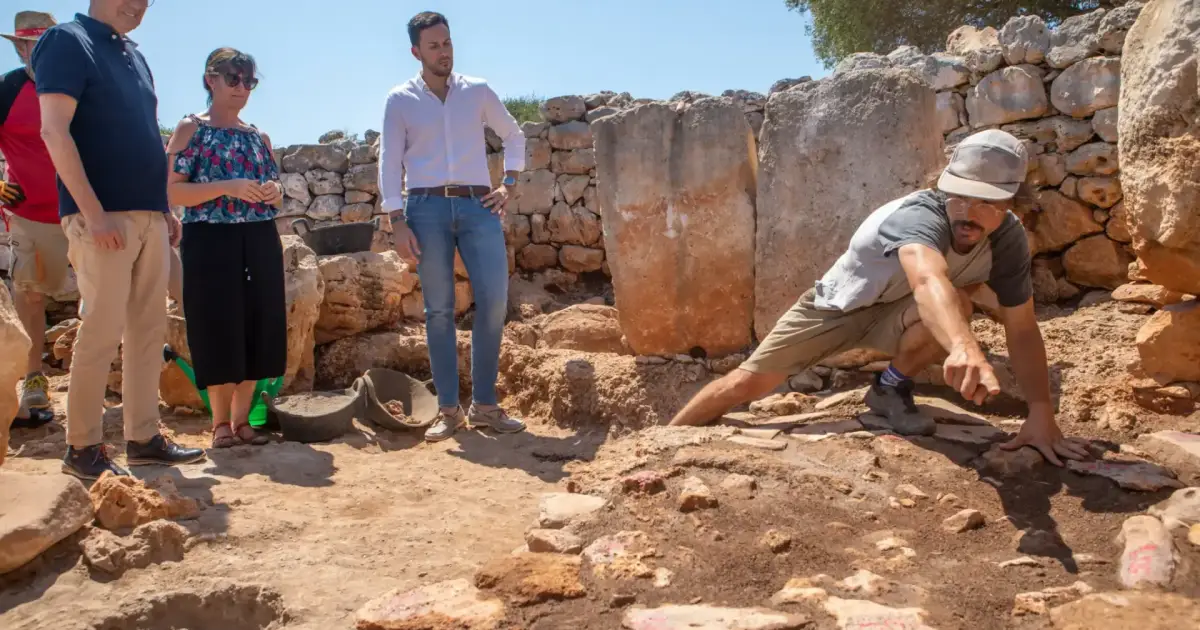
Since 2020, a group from Amics del Museu de Menorca has been working on the northern part of Torre d’en Galmés. The project is scientifically directed by Carlos de Salort and Marta Blanco.
- Restorers: Francesc Isbert and Andrea Argente handle the conservation of walls and floors.
- Anthropologists: Elena Sintes and Alicia Alonso have been in charge of digging up and studying the human remains.
- Support crew: About fifteen technicians, students, and volunteers from local schools and various Spanish universities lend a hand each season.
What They Found
New Human Remains in “Structure 1”
Structure 1 is one of the oldest houses in the prehistoric village. During the dig, archaeologists uncovered a new individual buried inside one of its rooms. This brings the total number of people found in the house to seven—six were recovered between 2021 and 2023, and the latest one appeared in the most recent campaign.
A Decorated Hinged Thalaiotic Pot
In another part of the same room, just beneath the floor level, lay a decorated hinged thalaiotic pot. The pot was placed deliberately, not accidentally dropped, suggesting it was put there on purpose.
Why It Matters
Unusual Burial Practice
Finding multiple individuals inside a domestic space is rare for Menorca. Usually, burials happen in separate cemeteries or caves. The presence of seven people within the walls of a house raises questions about what was happening during the final moments of the settlement’s occupation.
Possible Ritual Meaning
The pot’s hidden location under the floor hints at a symbolic or ritual act. It could have been an offering, a protective charm, or part of a farewell ceremony. Archaeologists are still debating its exact purpose, but the context makes it a compelling clue about the beliefs of the people who lived there.
Next Steps
Studying the Bones
The anthropologists will now conduct a detailed analysis of the seven skeletons. They will look at age, sex, health, diet, and any signs of injury or disease. This information can tell us more about who these individuals were and how they lived.
Preserving the House
Parallel to the bone study, the restoration team will consolidate and rebuild the walls, pilasters, and pavements of Structure 1. Stabilizing the architecture will protect the site for future research and allow visitors to see how the house originally looked.
Conclusion
The ongoing work at Torre d’en Galmés is shining a light on a mysterious chapter of Menorcan prehistory. A surprising cluster of human remains inside an ancient home, together with a deliberately placed decorated pot, challenges what we know about burial customs and daily life in the talaiotic period. As experts continue to study the bones and preserve the architecture, we inch closer to understanding the stories of those who lived—and perhaps died—inside these stone walls.
For more information, see the original report: Source
Images Credit: www.menorca.info